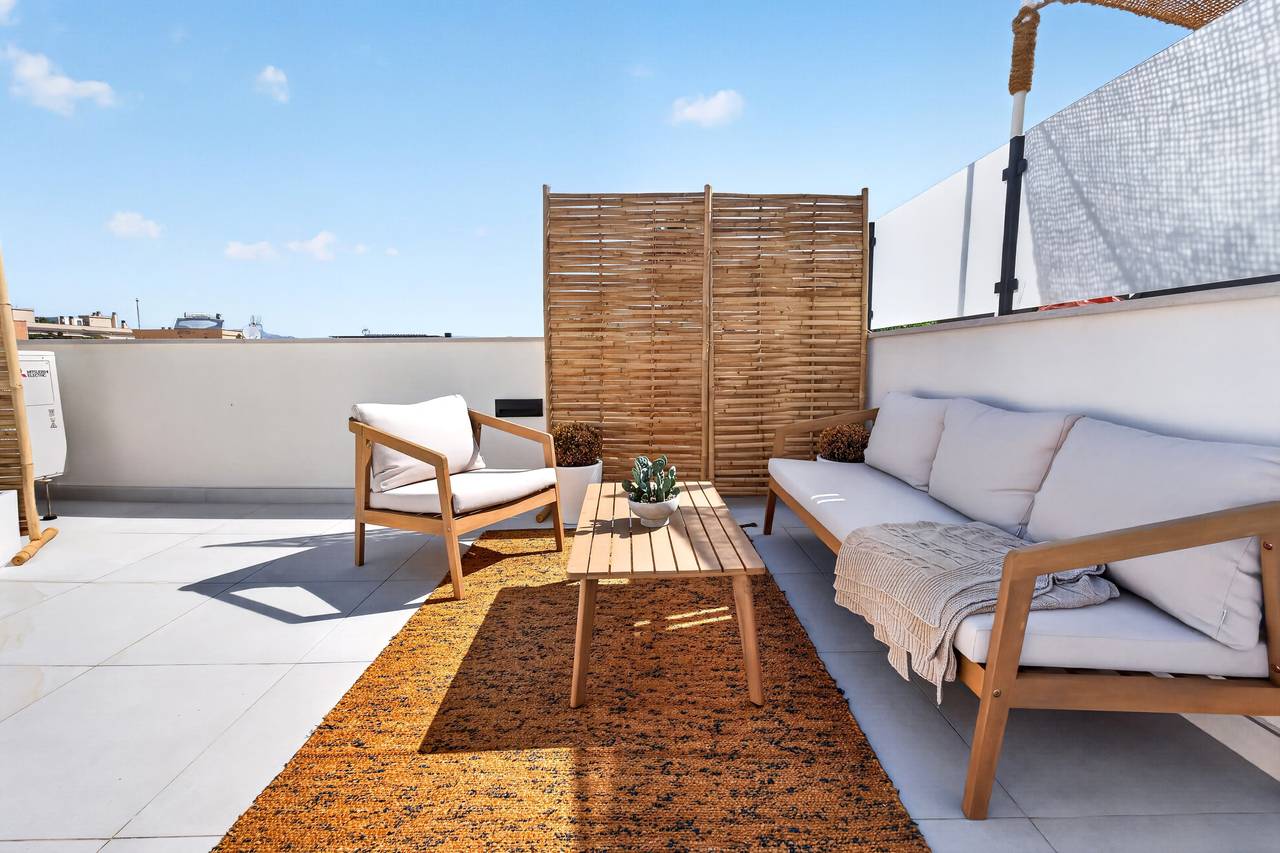
You own an apartment in Mallorca and you are thinking about renting it out. One question decides almost everything: short stays for holidaymakers, or long-term to people who actually live here? The two routes differ massively in law, in tax and in effort. Here is the honest overview, as of 2026, without the bureaucratic jargon.
The two routes at a glance
| Long-term rental | Holiday let | |
|---|---|---|
| Length of stay | months to years | under 30 days, to tourists |
| Licence needed? | no | yes, the ETV licence |
| Possible to start new in 2026? | any time | for apartments, barely |
| Effort | low, one tenant | high, constant turnover |
| Income | stable, predictable | higher per night, but volatile |
Holiday lets: the ETV licence and the catch in 2026
To rent to tourists legally in Mallorca (stays under 30 days) you need an ETV licence (Estancia Turística de Viviendas). Without a valid licence, short-term letting is simply illegal, and the fines are no joke: they range from 1,000 euros for minor breaches up to 400,000 euros in very serious cases.
There are three types:
- ETV for detached houses, villas and fincas, generally open-ended.
- ETVPL for apartments in multi-family buildings, valid for five years.
- ETV60 for owners who live there as their main residence and let for a maximum of 60 days a year.
The key point: since 2022 the Balearics have had a moratorium, the issuing of new ETV licences is on hold, and that still applies in 2026. For apartments in multi-family buildings in particular, a new licence is currently almost impossible to obtain. Holiday letting therefore generally requires an apartment that already holds a valid licence. If your apartment does not have one, holiday letting is realistically off the table.
Long-term rental: the straightforward route
The good news: long-term rental needs no tourist licence. It is legally secure, predictable, and for that reason the sensible route for most owners, especially when the apartment has no ETV licence.
What you need:
- a valid Cédula de Habitabilidad (certificate of habitability)
- an energy certificate
- a clean rental contract under Spanish tenancy law (LAU)
Worth knowing: Spanish tenancy law favours tenants. Residential contracts usually run for one year, but the tenant has the right to extend for up to five years (with private landlords). So you commit for potentially longer, but in return you get peace of mind, reliable income and no licence stress.
What is left at the end: the tax
This is where it gets interesting for owners from German-speaking countries, because not everyone is treated the same:
- Germans and Austrians count as EU tax residents: 19 % on rental income, and you may deduct the costs connected to the letting.
- Swiss owners are non-EU for tax purposes: here it is 24 %, and deducting costs is not possible. That is a real difference many people are not aware of.
It is all declared through the Modelo 210. Good to know: until 2023 this was due quarterly, but since the 2024 tax year an annual declaration is enough. That makes things noticeably simpler.
These rates and deadlines are the 2026 framework, not your finished tax plan. You should go through your specific situation with a tax adviser in Mallorca, especially in the Swiss case it pays to look at the detail.
Which route suits you?
In short: if your apartment has no ETV licence, long-term rental is the realistic and relaxed route in 2026. If it holds a valid licence, holiday letting is an option with higher income, but also far more effort and responsibility.
If you are unsure what your apartment could earn as a rental in its location, or whether a licence exists, simply get in touch. We know the apartment areas from Playa de Palma through Palma to Portals and will help you assess which rental route suits your situation.